
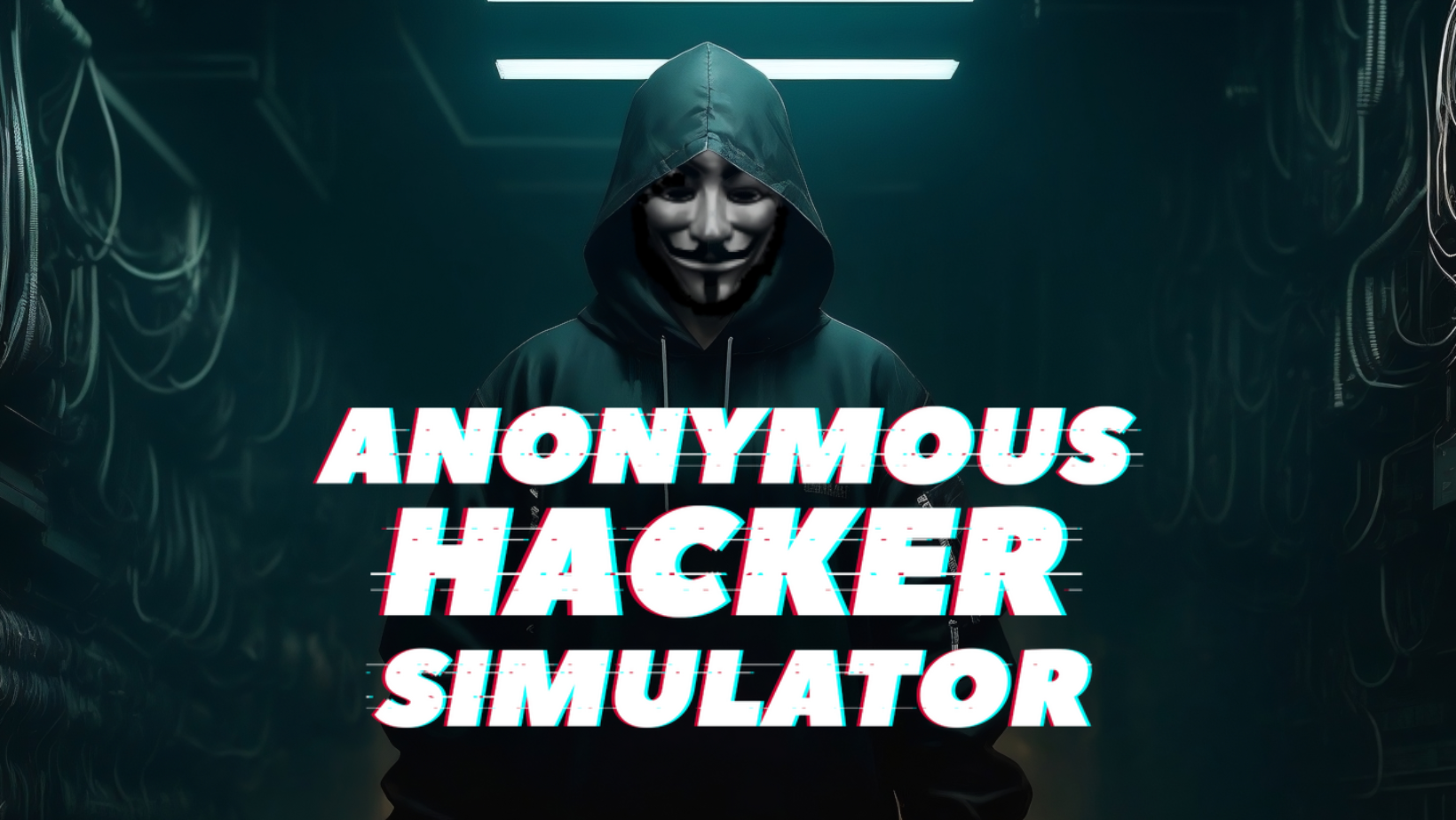
I always approach "hacking simulators" with a matter-of-principle suspicion. Too often it's smoke and mirrors: cascades of green numbers scrolling by, a "HACKING… 87%" progress bar, and a vague feeling of having played a screensaver disguised as a game. When you spend your days handling the real tools, the gap quickly becomes annoying.
Anonymous Hacker Simulator disarmed me. Not because it perfectly mimics reality — it doesn't, and that's exactly where the developers were smart.
The bet: real vocabulary, without the 400-page manual
The game sets you up in a hidden apartment, your HQ, and puts an arsenal of commands in your hands that will immediately speak to anyone who has touched a terminal: Nmap, theHarvester, Aircrack, Hping, Burp. These are not names invented to look cool. They are the tools I actually open, and finding them here, used at the right point of the kill chain, changes everything.
But — and this is the key point — these commands are "streamlined". Simplified. You are not asked to know Nmap's sixty flags by heart or to set up a full exploitation environment. The game keeps the right gesture and vocabulary while shaving off the friction that would turn the experience into a lecture.
It's a design decision, and a good one. Too much realism would have scared off 95% of players; too little would have insulted the remaining 5%. Anonymous Hacker Simulator aims right between the two.
Why it works (and why it's smarter than it looks)
As a cybersecurity student, I'm the worst possible audience for this kind of game: I can spot fakes from ten kilometers away. Here is what convinced me.
The logic of the stages is respected
You recognize the grammar of a real intrusion: reconnaissance, enumeration, exploitation, post-exploitation. The game doesn't have you "hack" a server by pressing a key; it first makes you look, scan, understand the target before acting. This order of operations is exactly what you learn in training. The game understood it and stages it without diluting it.
The vocabulary acts as disguised teaching
An average player who types nmap for the first time may not know what a port scan is — but will come away with the word, the gesture, and an intuition of what it is for. It's popularization through play, and it's devilishly effective. Without seeming to, the game educates.
The atmosphere carries it all
Minimalist interface, muted sound design, that feeling of being alone in front of a screen late at night. The game bets on atmosphere rather than spectacle, and that is precisely what makes every keystroke a little intoxicating. You believe in it.
Without seeming to, the game educates. It's popularization through play, and it's devilishly effective.
Narrative as a common thread
Beyond the technique, there is a story: you play a hacker from the Anonymous collective, on the trail of a sprawling organization that wants to mass-surveil civilians. The message isn't of extraordinary political subtlety, but it gives a reason for every mission. You don't hack in a vacuum to scrape up points: you follow a trail, you expose something. And this narrative backbone holds the progression together from start to finish.
The rank and unlock system supports this rise in power well: you gain resources, access new tools, and feel yourself becoming more competent. The curve is readable, never punishing.
My only reservation, which is also a quality
If I had to nitpick: the game can feel linear. You often follow a marked path, and you sometimes wish for more freedom in how you approach a target. Part of the community is also asking for more realism and room to maneuver.
But I understand the choice. Total freedom is the playground of a Grey Hack, demanding and arid. Here, the studio took on a different brief: making hacking readable and enjoyable. Criticizing this game for its lack of depth is a bit like criticizing a bicycle for not being a motorbike. It's not the same vehicle, and this one rides very well.
Well done to the developers
What I take away is the finesse of the balance. Making a credible hacking game without making it tedious is a narrow ridge line, and studio Sicarius walks it with a mastery that commands respect. You can tell they know their subject, and have chosen what to keep from the real thing and what to abstract.
It's exactly the kind of game I would have liked to put in the hands of someone who asks me "but concretely, what is hacking?". Not a movie caricature, not an indigestible manual — an intelligent in-between, playful, and one that rings true.
A credible and accessible hacking simulator, driven by a polished atmosphere and real technical rigor. A big bravo to studio Sicarius for dosing the realism perfectly.