
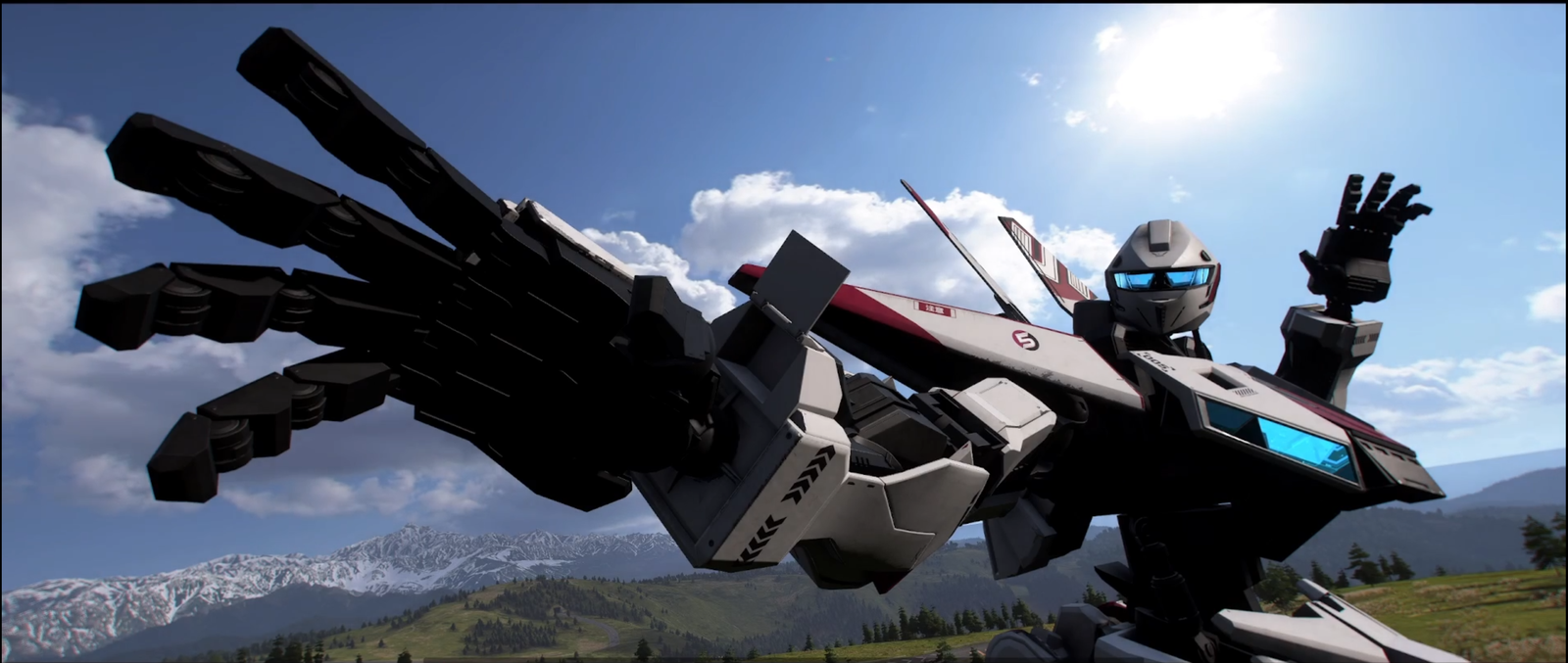
I'm not the type to swoon over a scripted cutscene. Usually, when a game takes control to shove an "epic" moment under my nose, I feel the rails under my wheels and I tune out a little. Forza Horizon 6 got me. And it got me with what I've been calling, for lack of a better term, the "Mecha-cool" race — its real name is Mech My Day.
I expected nothing from it. That is precisely why it stayed with me.
The context: a giant robot and a Tokyo highway
To set the scene, Forza Horizon 6 takes us to Japan this time, and the game doesn't hide it for a second. Local culture seeps in everywhere, and Mech My Day is the most direct demonstration: you start a showcase race and, opposite you, there is Chaser Zero, a colossal mech straight out of the Gundam imagination. The reference is crystal clear for anyone who knows the life-size Gundam in Yokohama.
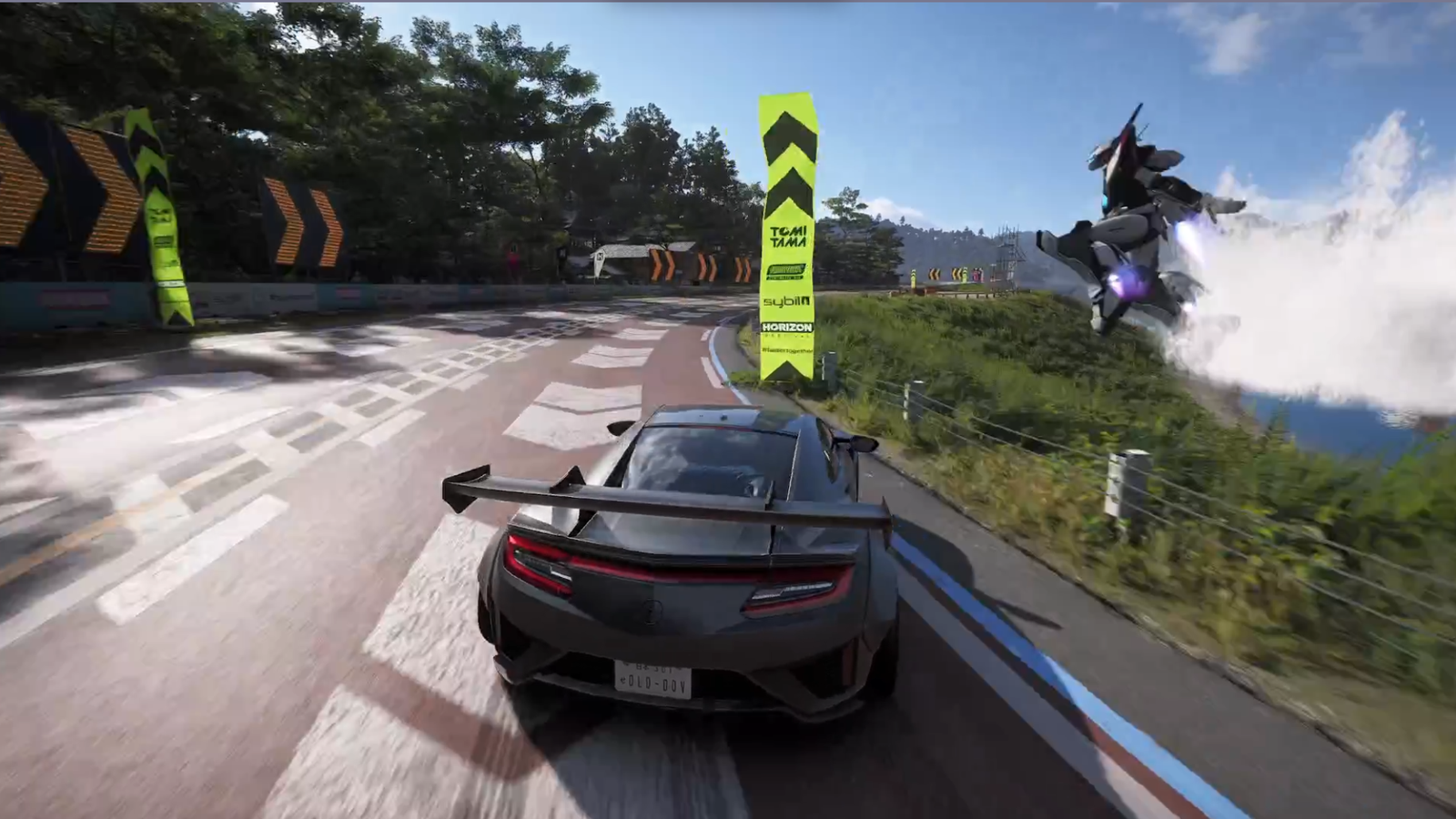
On paper, it's big scripted spectacle: you speed through Tokyo's highways and streets while the robot pulverizes pieces of scenery around you. The kind of sequence we've seen a thousand times and that, normally, leaves me lukewarm.
Except here, it works. And thinking back on why it works, I understood that all the credit goes to a game design that makes itself forgotten.
The (brilliant) trap: you can't lose
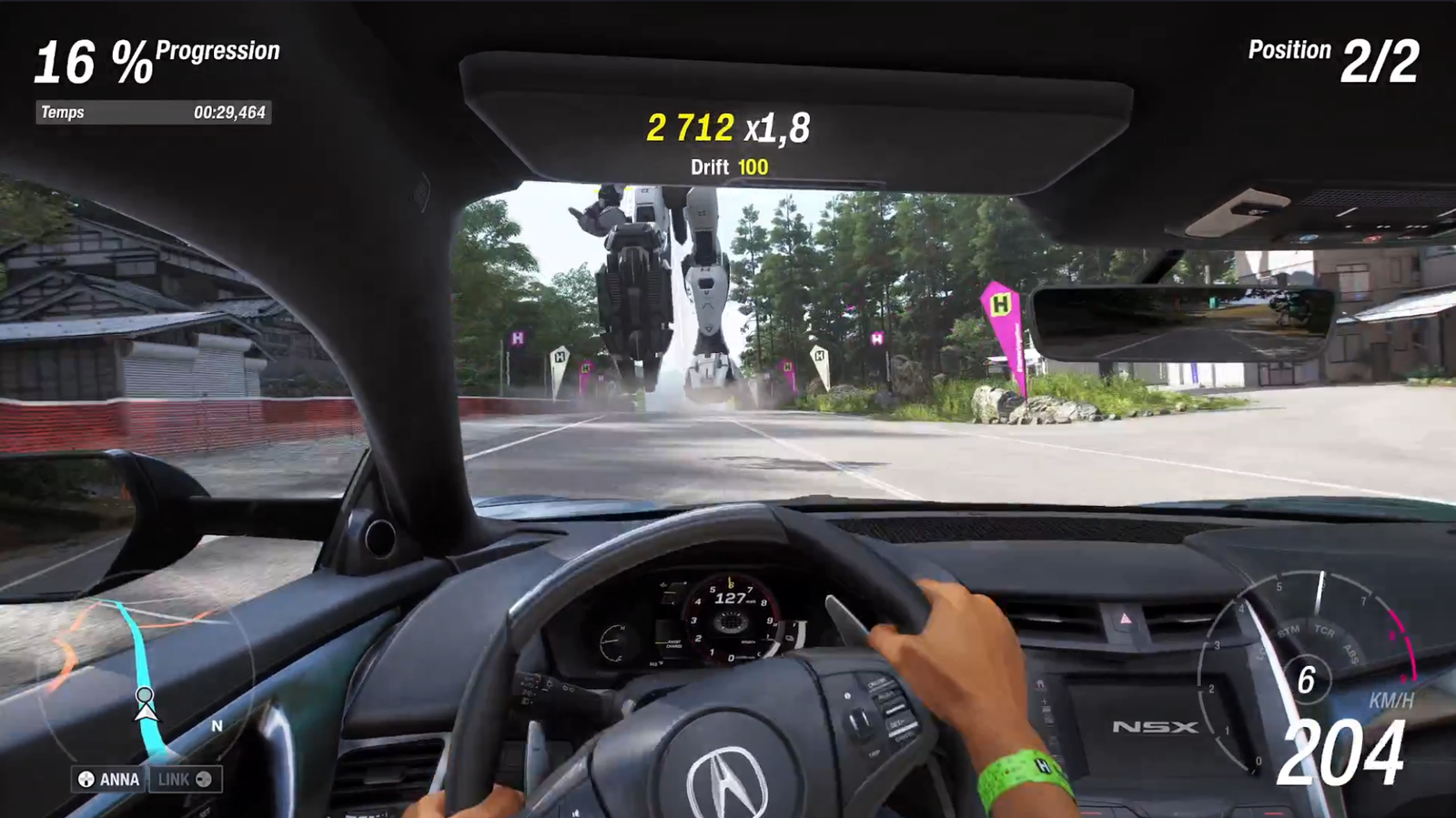
Here is the race's worst-kept secret: you can't lose it. Chaser Zero breaks down just before the finish line, no matter what you do behind the wheel. It's a staging, not a competition.
And that is exactly where the game design becomes interesting. Because at no point during the race did I feel it. I was convinced I had to push hard to avoid being outpaced by this mountain of steel. I took stupid risks, brushed past highway pillars, accelerated at the wrong moment — all for an outcome already written.
That is the very definition of subtle design: creating the illusion of stakes without ever demanding them. The game doesn't lie to me, it keeps me busy.
How Forza brings us along without us noticing
Breaking it down, I find several levers that the designers pull silently.
The framing does all the work
The camera, the scale of the mech, the way it fills the horizon: everything is calibrated so that my eyes stay glued to the action rather than the speedometer or the minimap. You stop calculating, you react. It's visceral, not cerebral.
Destruction creates a false danger
Every piece of scenery that explodes screams "move, or else" — when in reality, nothing can stop me. It's a decorative threat, but my reptilian brain didn't read the script.
The pace is tightly controlled
No unnecessary breathing room, no drag. The race lasts exactly as long as it takes for the "wow" effect not to wear off. It's probably the hardest thing to get right, and it's what separates a successful spectacle from the cutscene you'd like to skip.
It arrives at the right time
Mech My Day unlocks fairly early, once the green wristband is filled. The game offers this moment of bravura just when you've finished learning the basics and want to be rewarded. The narrative timing is as polished as the timing of the race itself.
Why it matters
What I take away is that subtlety doesn't always lie where you expect it. We associate "good game design" with deep systems, freedom, mechanics that respond to each other. Mech My Day is the opposite: a corridor, a scripted outcome, zero real freedom. And yet it's one of the moments where I felt the most in it.
The lesson is that immersion doesn't come from the amount of choice I'm given, but from the quality of my attention. Forza Horizon 6 doesn't give me a choice — it simply makes sure I have no desire to look elsewhere.
I entered this race with a raised eyebrow. I came out with a goofy grin, reopening photo mode to immortalize this ridiculous and magnificent robot. That's all I ask of a game, deep down: to surprise me where I least expected it.
And you, did Chaser Zero get you too?