
Introduction
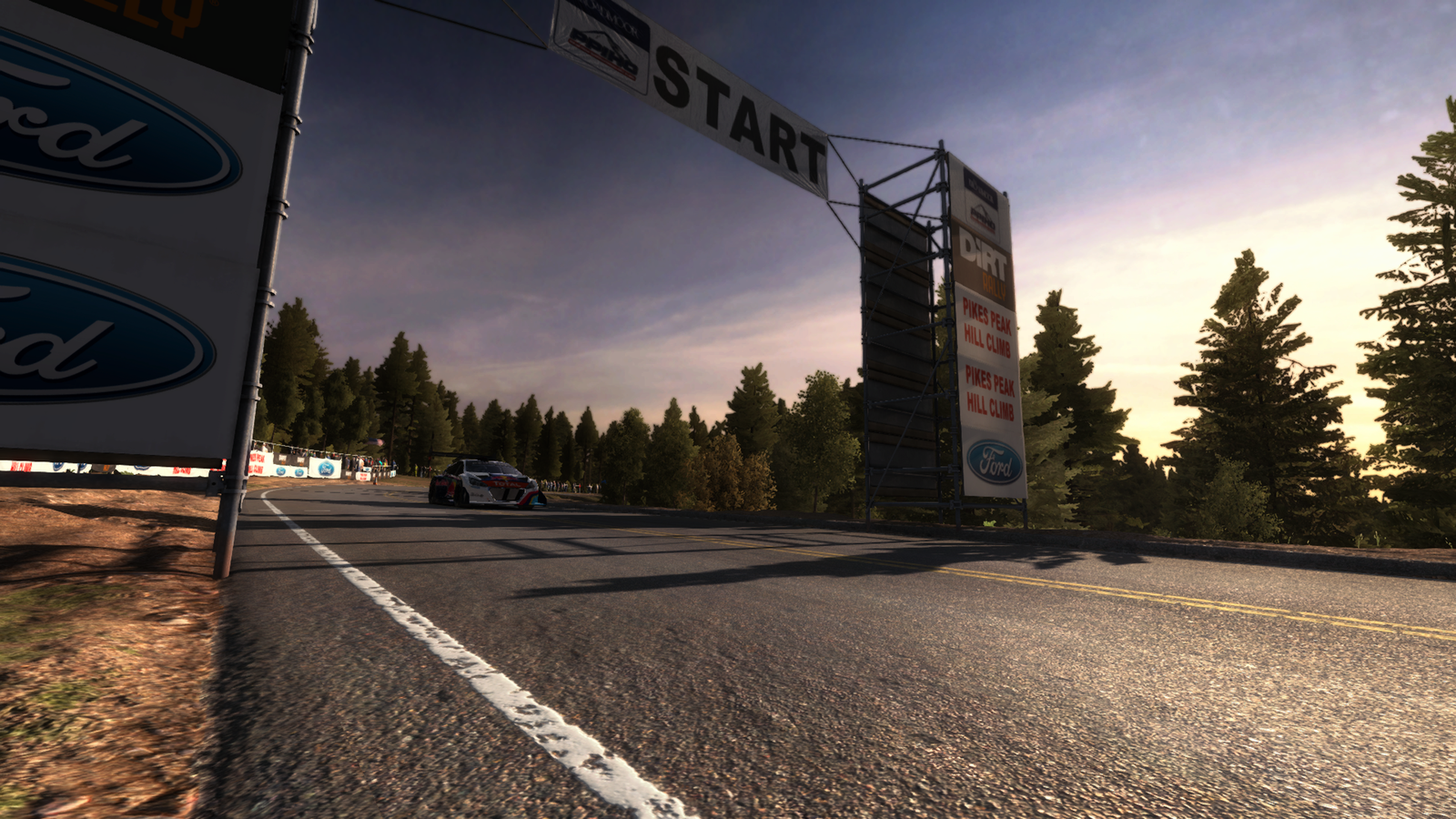
Released in 2015, DiRT Rally sent a shockwave through driving simulation fans. By breaking cleanly with the mainstream, festival-style approach of its predecessors, Codemasters delivered an uncompromising return to roots: a demanding physics engine, merciless handling of weight transfer and a permanent sense of danger.
In the middle of the packed-dirt and mud stages, the British studio had slipped in a monument that, years later, resonates as an isolated masterpiece: the official and complete integration of the legendary Pikes Peak climb.
1. The peak of the Codemasters era
In DiRT Rally, Pikes Peak wasn't just a bargain-bin add-on. The course received a full historical treatment:
- Three faithfully modeled surfaces: the modern fully paved version, the mixed version of the transition years and the mythical 100% gravel configuration.
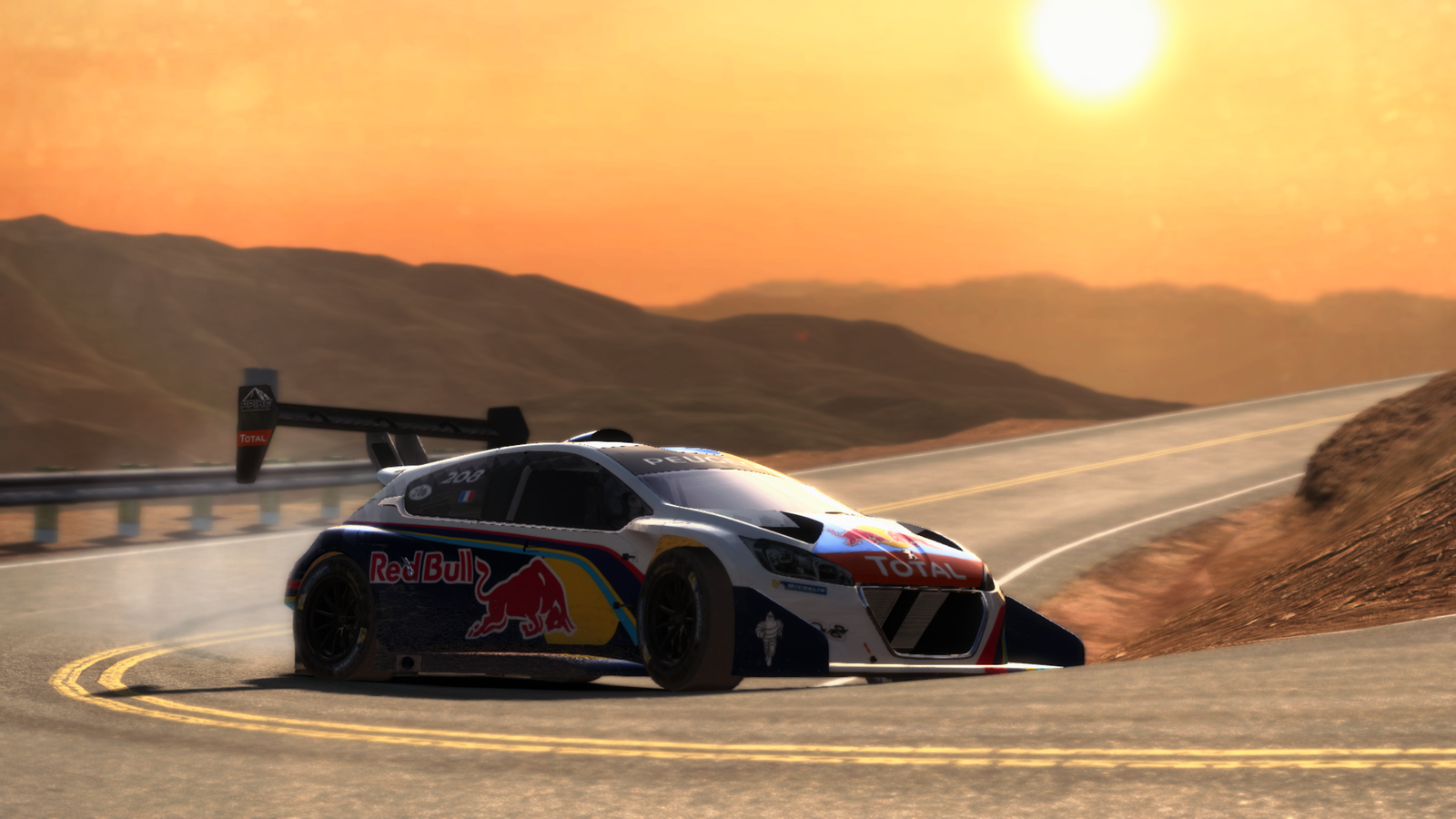
- Engineering beasts built for thin air: the Peugeot 208 T16 Pikes Peak with its 875 horsepower for 875 kg driven by Sébastien Loeb, alongside the Audi Sport Quattro S1 E2 and the Peugeot 405 T16.
- 156 corners on the edge of a ravine: nearly 20 kilometers with no co-driver, where the clock is negotiated by pure memory and where the slightest excess of optimism sends the car into the void at over 4,000 meters of altitude.
2. A total and incomprehensible disappearance
Since that first DiRT Rally, the finding is unequivocal: no driving simulation has brought back the official Pikes Peak event. The course disappeared as early as DiRT Rally 2.0 and is conspicuously absent from EA Sports WRC as well as from the other major productions. Apart from community-modded tracks in Assetto Corsa, the "Race to the Clouds" is absent from official radars.
The main cause remains legal. In early 2017, Polyphony Digital (Sony / Gran Turismo) secured the exclusive rights to exploit the license. The bitterest paradox for players is that, despite this exclusivity, the Japanese studio has still not included the full course in its own productions, freezing access to one of the most spectacular circuits in motorsport history.
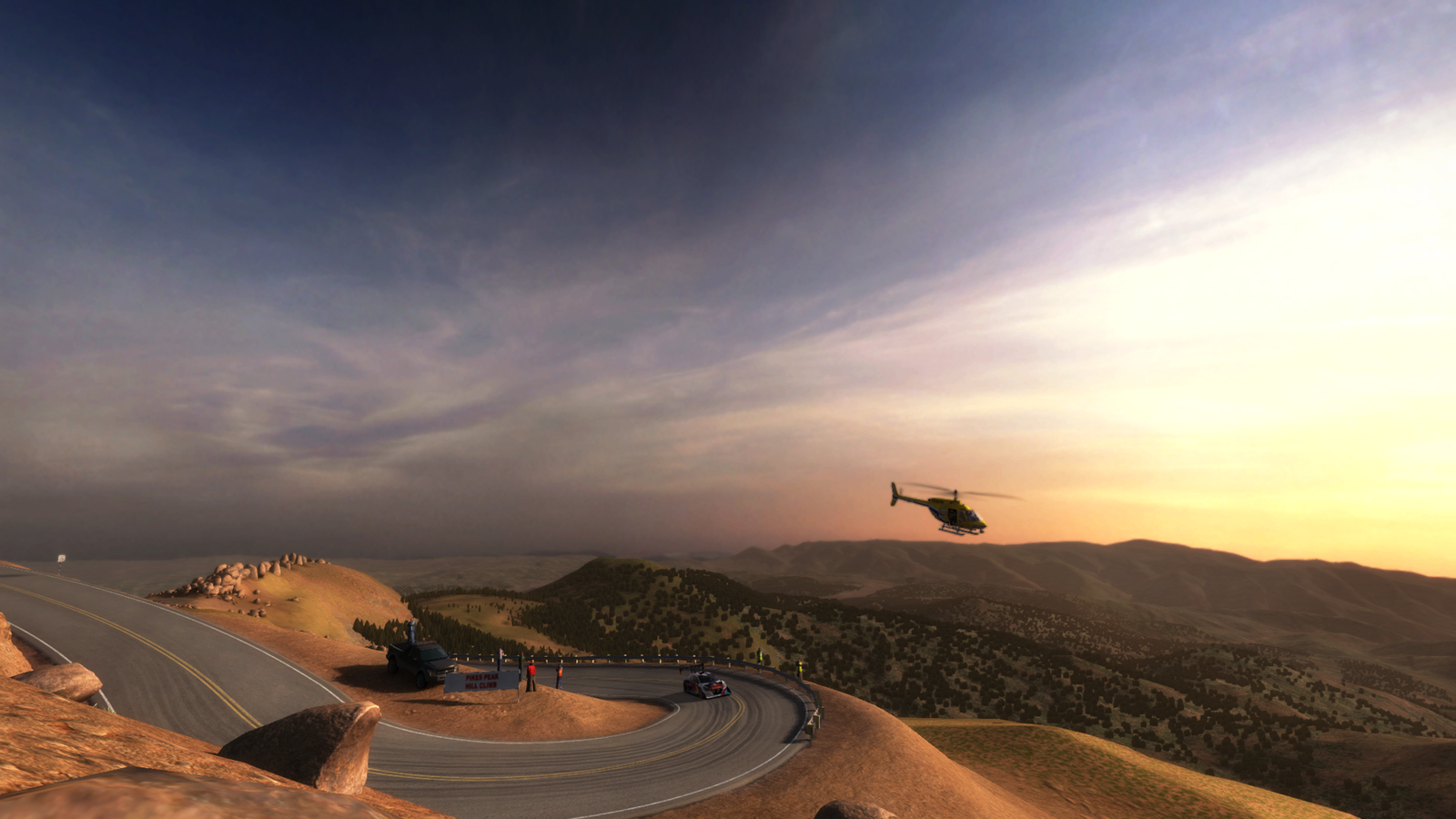
Despite the exclusivity, the full course remains absent from Polyphony Digital's games. The "Race to the Clouds" is locked down without being exploited.
3. Untapped records and technologies
While the simulations stay silent, the reality of Pikes Peak has never stopped evolving:
- The electric era: the absolute record smashed by Romain Dumas at the wheel of the Volkswagen I.D. R prototype (7 min 57.148 s), demonstrating the superiority of electric power in the face of the lack of oxygen at the summit.
- Ever more outsized concepts: the climbs of the Ford Supervan 4.2 or the Unlimited-class prototypes, constantly pushing the limits of aero and telemetry.
This entire modern slice of motorsport now goes completely under the radar of current racing games.
4. The plea: for a 100% hillclimb game
Faced with often standardized rally catalogs, a gaping void remains to be filled: a simulation entirely devoted to Hill Climb. Unlike rally where you drive to pace notes, hillclimb demands a radically different approach:
- Blind, pinpoint driving: the obsessive memorization of every bump in the asphalt and every visual landmark.
- Engine physics tied to altitude: the gradual loss of power of combustion engines as the air thins, contrasted with the constant torque of electric motors and their battery management.
- An emblematic worldwide calendar: bringing together in a single title Pikes Peak, Mount Washington, the Mont-Dore hillclimb, Saint-Ursanne - Les Rangiers, Trento-Bondone or the Goodwood Festival of Speed.
Why it remains a regret
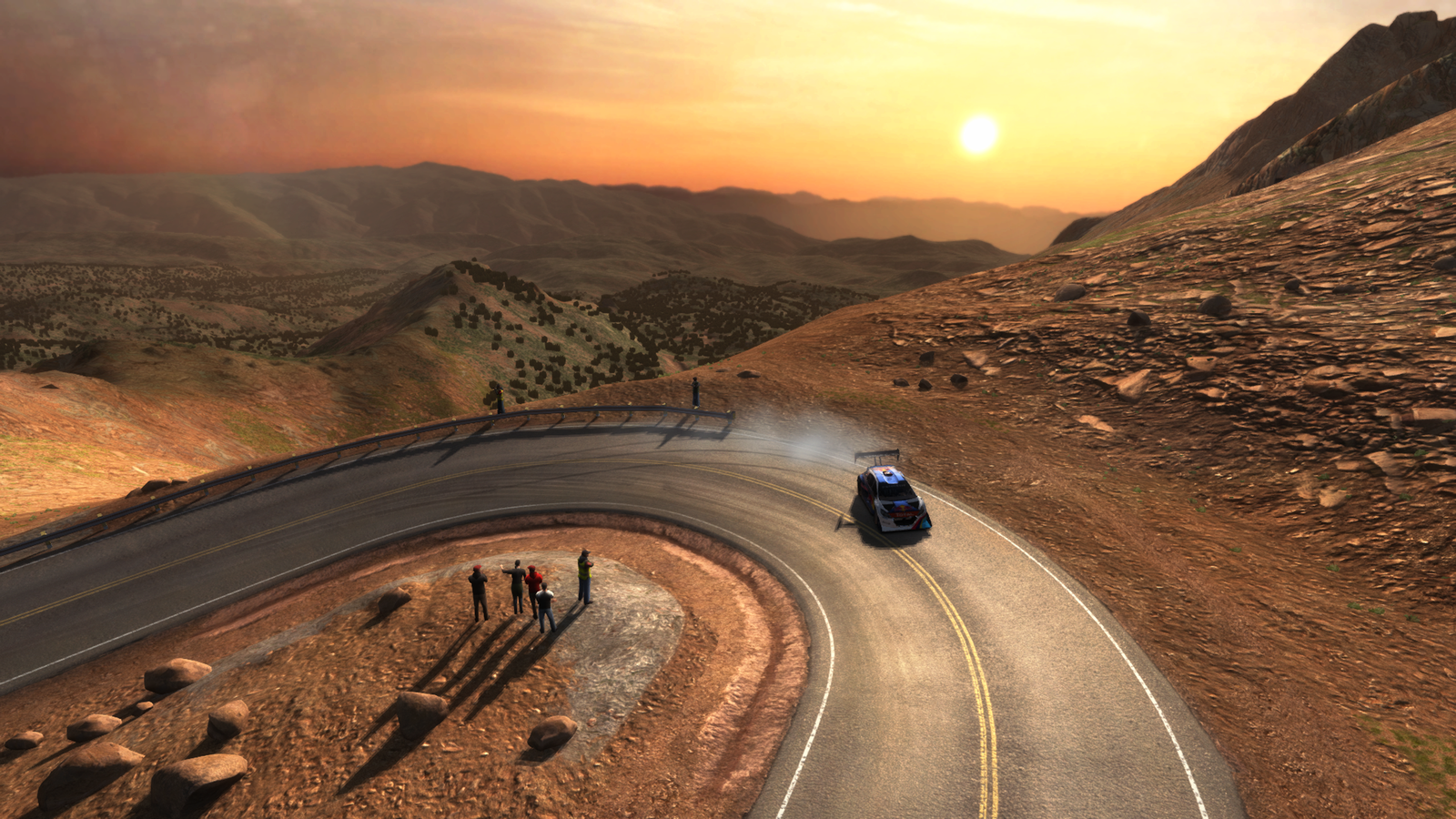
Until a publisher grasps the scale of such a project or the license locks finally come off, the finding remains bitter: to officially take on the slopes of Colorado at the wheel of the 208 T16, you still have to relaunch a game released ten years ago.